



Discover how attention spans and screen fatigue affect children’s learning, and which strategies help maintain focus in online English lessons.


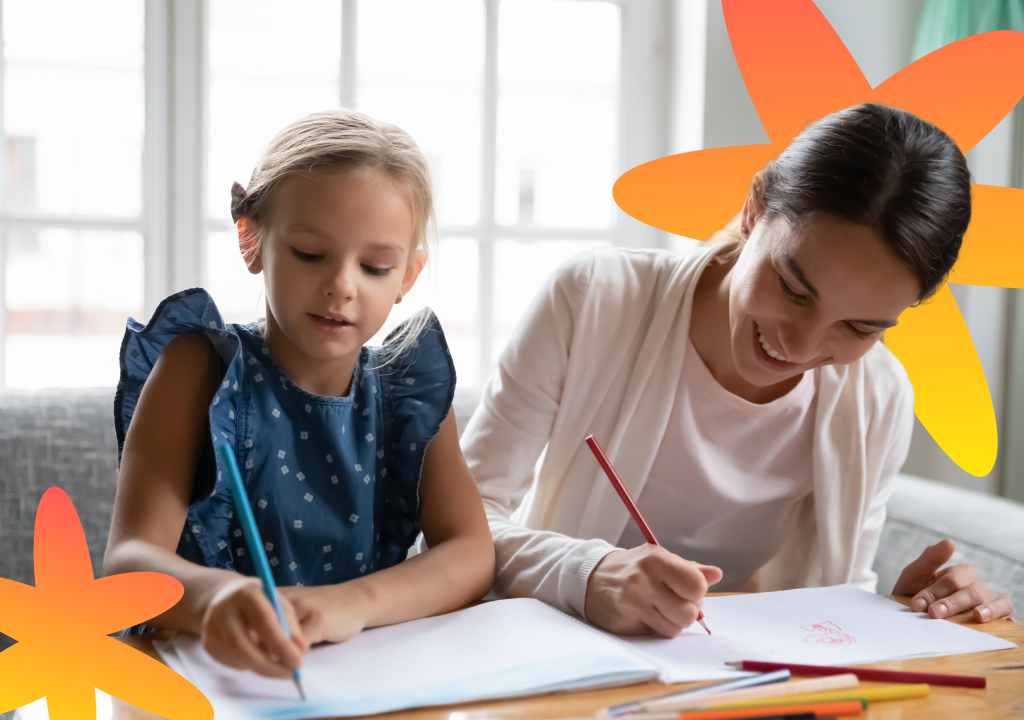
Googling (or ChatGPT-ing) ways to practice English at home with your child can make you feel overwhelmed. There are dozens of activities to choose from, and you’re not sure which are effective and which are just filler to get a listicle to the nice, round number 10.
Rest assured, the activities that make up our list are supported by academic research and/or co-signed by hundreds of Novakid’s certified English teachers.
So, if you’re looking for practical and proven ways to help your child learn English from home, look no further than this blog post—which also features expert quotes and real-life examples from our teachers.
When your child practices English at home, they get additional exposure to the language, strengthening language connections in the brain that make it possible to learn English.
This is particularly the case for children under 12. But even outside of the critical period for learning a language, regular English practice and exposure to authentic materials (texts, audio, video) help your child learn how to use English naturally and in diverse situations.
Cambridge University research also shows that primary school children in English as a Foreign Language (EFL) contexts need between 160 and 980 cumulative guided learning hours (classroom + guided self-study) to reach a given CEFR level from absolute beginner.
| English Level (CEFR) | Total Guided Learning Hours To Get To Level From Beginner |
| Pre-A1 | 160-200 hours |
| A1 | 340-440 hours |
| A2 | 540-680 hours |
| B1 | 780-980 hours |
In other words, your child must consistently practice English at home and at school to reach true proficiency.

There are plenty of ways for your child to practice English at home, but which activities are actually effective? Here’s what academic research and Novakid English teachers have to say:
Daily routines are the perfect opportunity for your child to practice English at home. Chores, meals, and bedtime all allow children to make English a daily habit.
For example, tell your child to describe their chores in English (making their bed, tidying their room) as part of speaking practice. Or have them write English words for household items on sticky notes and place the notes on the right objects, thereby building their vocabulary.
Speaking of routines, download our Daily Routine Worksheet. It includes English practice exercises like matching, sentence writing, reading comprehension, and word scramble, helping your kid improve their English skills.
In a Novakid survey of 347 English teachers, 86.4% of respondents chose talking in English daily as the most effective activity for helping children learn English at home.
Set aside time each day for English-only conversations with your child. You could ask them about their meal during breakfast or about their day when they come home from school.
The goal is to get your child talking freely and consistently in the language, so don’t worry too much about grammar and other mistakes.
A research study published in the Journal of Childhood Development found that role-playing activities improve children’s speaking skills, listening skills, vocabulary, and understanding of language concepts.
After school and on weekends, try role-playing the following everyday situations with your child:
Let them personalize the dialogue and use different voices if they want. Be sure to swap roles, and provide gentle feedback on your child’s language use afterward.
Per the Novakid survey, 64.9% of Novakid teachers see reading together as an effective way for children to practice English at home.
Choose English books or bilingual books based on your child’s CEFR level. For example, The Cat in the Hat by Dr. Seuss for A1 to A2 kids.
Don’t just take turns reading a page, though. Instead, have a conversation about the book to improve your child’s reading comprehension skills.
This is called dialogic reading and involves asking your child the following types of questions:
Novakid teachers agree children can learn English with songs. Indeed, 43.8% say singing songs moves the needle for children’s English learning, per our survey.
And according to research in the peer-reviewed journal Children (Basel), rhythm and melody can support word comprehension, grammar comprehension, and phonological awareness.
When choosing songs for your child, take inspiration from Novakid teacher Rogen Garcia. She incorporates singing and chants into her English lessons but only when these activities match students’ “needs, interests, and personalities.”
So, if your kid likes music, have them choose English songs from their favorite genres or artists.
A case study on Novakid found that its gamified instruction improved learning outcomes for children ages 4 to 12 by 39%.
53.9% of surveyed Novakid teachers also believe playing games is a great way for children to practice English at home.
Popular ESL games for kids include:
English movies and TV shows expose your child to natural, native speech. 73% of surveyed Novakid teachers also cite watching cartoons as an excellent way to practice English at home.
Our guide on using Netflix for language learning suggests 20 movies and TV shows you can watch with your child or let them watch independently (from Peppa Pig to Madagascar: Escape 2 Africa).
To make the most of your kid’s viewing experience, follow these tips:
Listening to native English speakers read stories aloud or talk on podcasts helps children pick up on accents, intonation, rhythm, and pronunciation.
Put on a podcast like Forever Ago or play the audio version of an English book. Let two minutes of the audio play, and then ask your child content-related questions like “Which pokémon made the Pokémon game famous early on?” (It wasn’t Pikachu, according to the Forever Ago podcast!)
Then, play the audio for another two minutes and repeat the exercise. You can also have your child write down words they don’t know as they listen.
A research study published in the Global Spectrum of Research and Humanities journal concluded that writing contributes substantially to language development, helping learners with grammar accuracy, vocabulary retention, and communicative competence.
Help your kid build a writing practice by trying writing exercises like:
For example, Novakid teacher Rogen Garcia had a student complete this fill-in-the-blank exercise:
“Fill in the correct form of ‘to be’ (‘am,’ ‘is,’ ‘are’).
For more examples, download our worksheet on conjugating “to be” verbs. Or check out our other writing-related English practice exercises.
According to our research, 42.9% of Novakid teachers think learning apps help children practice English at home.
For instance, our app Novakid Junior helps students practice speaking skills, build phonemic awareness, and improve syntactic awareness through game-based English learning activities and speaking exercises.
Other apps your child can use to learn English from home include:
Of course, your kid doesn’t need to practice on multiple apps. Select one based on the skills they need to improve and complement online learning with off-screen practice.
Our survey found that 73.2% of Novakid teachers said AI improves children’s speaking confidence, though many described the improvement as small.
Under your supervision, your child can practice with AI speaking apps like NovaPals. It provides a CEFR-aligned curriculum, and your child can complete speaking challenges while receiving corrective feedback.
Another option is voice-enabled chatbots like ChatGPT Voice Mode, which your child can use to role-play custom scenarios.
Be sure to adhere to AI speaking practice do’s and don’ts. And follow Novakid teacher Ali Sullivan’s advice to “set a small, achievable goal so the practice has a purpose, use age-appropriate platforms, check privacy settings, and explain to children that AI is a tool—not a person.”
Communicating with native English speakers is the best way for children to develop their language skills and reach fluency.
Luckily, online English classes like Novakid’s facilitate this. Not only is your child able to practice English at home, but they can also do so with a native speaker and certified expert.
So, what are Novakid classes like? Expect short, play-based lessons tailored to your child’s CEFR level and focused on developing their speaking, listening, reading, and writing skills.
While you may choose to stick to learning apps and AI tools for your child’s English learning, 94.1% of Novakid teachers believe that AI cannot replace human teachers.
38.6% of surveyed Novakid teachers say children need an extra 15 to 30 minutes of English practice outside of regular classes each week.
Here’s what a 30-minute practice session might look like for your child.
| Activity | Duration |
| Watch a short English video about a topic your child enjoys. | 5 minutes |
| Discuss the video in English. | 10 minutes |
| Have your child write down five new vocabulary words from the video. | 5 minutes |
| Let them write 5 short sentences using each vocabulary word. | 5 minutes |
| Have your child read the sentences aloud, and give them gentle feedback on grammar and pronunciation. | 5 minutes |
Parents hinder their child’s English learning progress by making the following mistakes:
Regardless of the activities you choose to help your child practice English at home, the bottom line is this: if you want your child to master the language, you need to make English a part of their everyday life.
That said, consuming content in the language is just one step. The next is regularly engaging them in English-only conversation, which Novakid’s online classes are designed to do.
So if you’re ready to take your child’s English learning to the next level, book a free trial lesson with Novakid today.


Effective ways to teach English to your child are to create structured lessons tailored to their CEFR level, use a combination of language teaching strategies like the Direct Method to teach core language skills, reinforce concepts through learning apps and multimedia content, use quizzes to assess learning, and complement instruction with expert-led English lessons.
English speaking practice at home includes role-playing scenarios like ordering at a restaurant, conversing with an English teacher online, choosing a vocabulary word and using it in a sentence aloud, talking about their day, and reading passages out loud.
Your child can practice English language skills—including reading, writing, speaking, and listening—for free by using free learning apps like Novakid Junior and NovaPals. They can also download and complete free English worksheets and consume English media online for free.
Your child can use ChatGPT’s Voice Mode to role-play custom scenarios, get real-time feedback on their pronunciation and grammar, practice integrating vocabulary words into real conversations, and generate scripts to practice independently. Keep in mind that ChatGPT is not meant for children under 13 and that you should monitor all exchanges between your child and the chatbot.
Discover how attention spans and screen fatigue affect children’s learning, and which strategies help maintain focus in online English lessons.
Discover how AI is transforming English learning. Explore the benefits of 24/7 tutoring, the risks of cognitive atrophy, and the future of education.
How to help your child use AI to practice speaking when learning English and what mistakes to avoid.
Individual or group lessons? Online or offline classes? Study with a tutor or an app? Exploring the benefits of one-on-one lessons over other types of classes.
Discover how the TPR method enhances online English learning for children. Movement, motivation and better results – even through a screen.
Based on a survey of 347 Novakid teachers, discover 5 key questions to ask before choosing an English course for your child. From speaking practice and confidence-building to AI tools and more.
We and our partners use cookies to improve your experience, personalize content and ads, and analyze traffic. By clicking 'Accept all', you agree to our use of cookies in accordance with the Cookie Policy.
You can personalize your choices by clicking on 'Cookie settings'.
We use four types of cookies on our website. You can learn more about cookies and how we use them here: Cookie Policy
Strictly necessary
Advertising
Analytics
Personalization