



This Novakid article reveals why some children learn English faster than others — from personalised attention, to confidence, consistency, and cognitive style.



How can you tell which course will really help your child learn to speak English? A good course should do more than teach grammar rules and introduce new vocabulary. Children need opportunities to use English in real conversations, make mistakes, build confidence and practise through activities that keep them interested.
To help parents make a more informed choice, we asked 347 Novakid English teachers to share their classroom experience. Their answers offer useful insights into what helps children learn and which questions are worth asking before choosing a course.
Knowing English and using English are not quite the same thing. Children need opportunities to recall words and use them to communicate. That’s why speaking practice should be an essential part of any English course.
Our survey offers a useful reminder: 86.4% of teachers selected daily English conversation as the most helpful way to support English learning. Conversations give children a reason to use the language they are learning rather than simply recognise it.
Questions to ask
Look for lessons where children take an active role. They should have time to answer, ask questions, describe things and talk about familiar topics.
We asked teachers which classroom activities they considered most effective for helping children remember new words. Flashcards came first: 43.8% of teachers gave them the highest score, followed by real conversation practice at 40% and games at 39.8%.
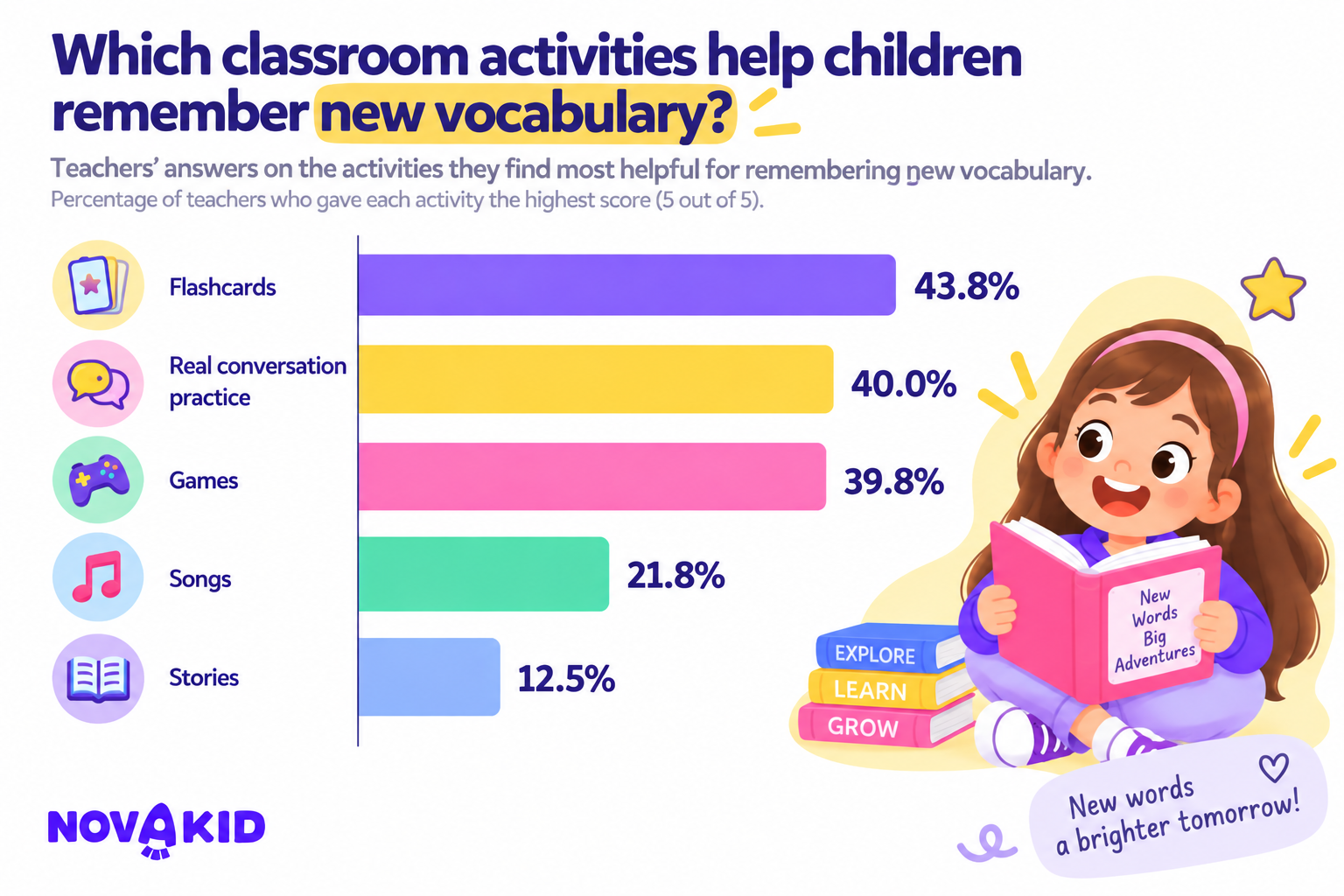
These activities help children encounter and practise words in different ways. Flashcards connect words with images, games make repetition more engaging, and conversations encourage children to retrieve and use vocabulary when they need it.
For example, a child might first learn the word apple using a picture card, practise it in a matching game and then use it in a conversation: “I like apples.” Each activity offers another opportunity to remember the word and put it to use.
Digital flashcards, interactive games and other age-appropriate activities can make practice more engaging and give children extra opportunities to use English.
Learning can happen at home too. Watch our videos on How to have fun learning English at home, for ideas of activities you can do with your child at home
Some children are happy to speak English from the very first lesson. Others are shy, take longer to answer or worry about making mistakes. If your child is like this, it’s worth asking how the teacher will help them feel more comfortable speaking.
We asked Novakid teachers what reduces shyness and anxiety when speaking English, the most common answer was building trust and helping children feel comfortable, mentioned by 32.7% of teachers. Games and humour came next (25.8%), followed by familiar topics and children’s interests (25.5%) and praise and encouragement (23.6%).

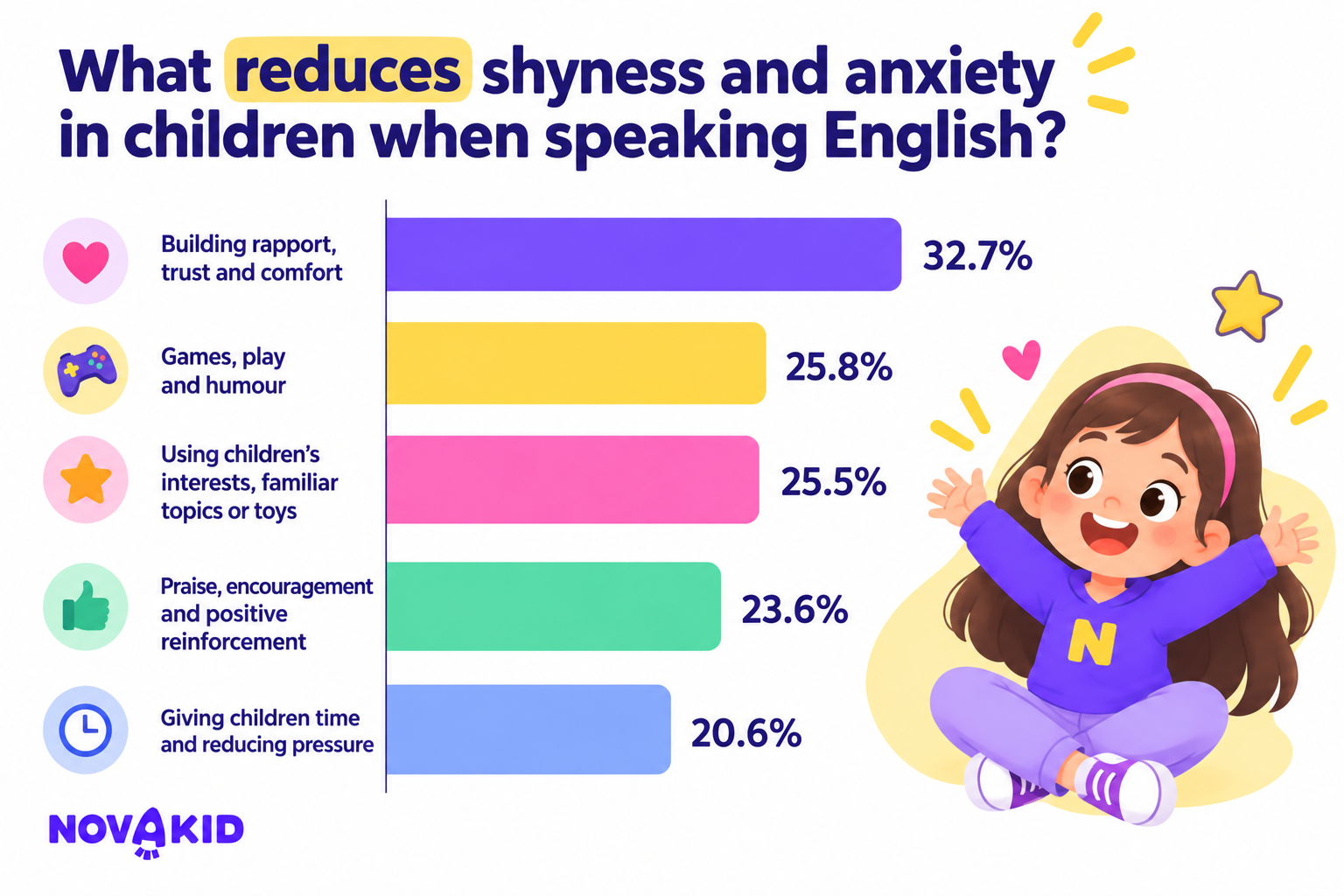
These small details matter. A child who feels rushed or constantly corrected may become even more reluctant to speak. A child who is given time, encouragement and interesting things to talk about may gradually feel ready to say more.
English practice doesn’t have to stop when a lesson ends. Some children enjoy revisiting vocabulary through digital activities, while others may be curious about using AI tools to practise simple conversations. But does AI actually help children feel more confident speaking English?
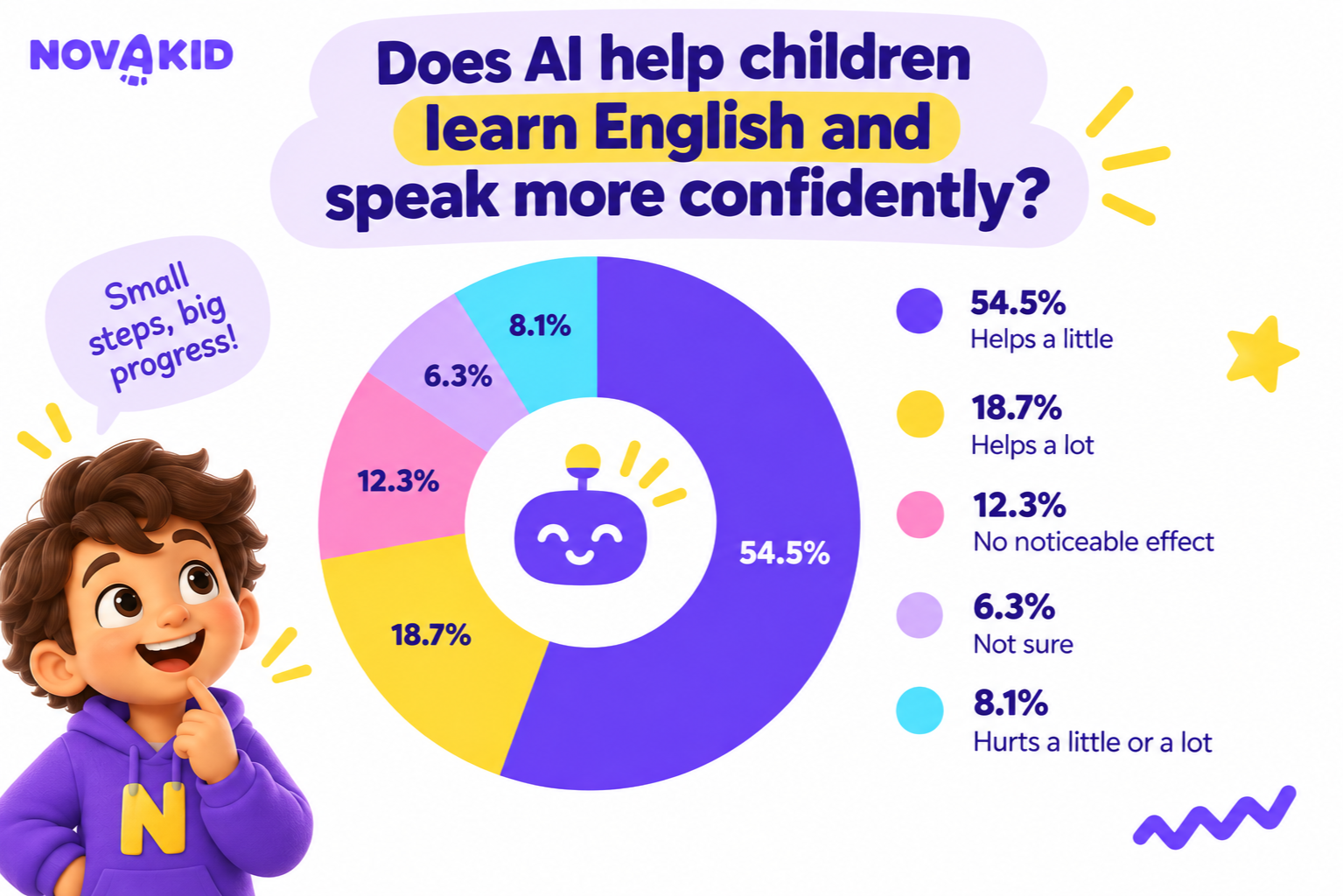
We asked teachers this exact question: “Do you think AI practice tools help, hurt, or have no effect on speaking confidence?” The answers were mostly positive. Overall, 73.2% of teachers said AI practice tools help speaking confidence. However, most saw a limited effect: 54.5% said they help a little, while 18.7% said they help a lot.
These results reflect teachers’ opinions about speaking confidence, not proof that AI automatically improves English proficiency. AI can offer an additional opportunity to practise, but it shouldn’t be treated as a replacement for meaningful conversations with teachers or other people. Read more on how AI is helping with learning English.
If a course includes AI tools, find out how they are designed for children and what kind of practice they offer.
An English lesson once a week is a great starting point, but children also need opportunities to hear and use the language at other times. The more often they come across familiar words and expressions, the easier it becomes to recognise them and start using them naturally. The Novakid teacher survey confirms how valuable these everyday activities can be. 86.4% of teachers identified daily conversations in English as a useful way to support learning at home. Other activities were also considered very useful:
When choosing a course, look at the whole learning experience, not just what happens during the lesson. Extra resources can help children revisit what they’ve learned, become more familiar with English and keep practising in a relaxed way, without feeling that they have been given more homework.
The teachers in our survey highlighted the value of conversation, vocabulary activities and a supportive atmosphere. Together, these elements help children move beyond recognising English words and towards using them to communicate.
Try a free trial lesson with Novakid and see how your child responds to the learning experience and whether it feels like a good fit.


This Novakid article reveals why some children learn English faster than others — from personalised attention, to confidence, consistency, and cognitive style.
Insights from English teachers on children’s speaking confidence, vocabulary retention, home practice, AI and the role parents play in language learning.
How does speaking English help children build self-confidence? 347 teachers share what works, plus the benefits of knowing a second language beyond grades.
Discover how attention spans and screen fatigue affect children’s learning, and which strategies help maintain focus in online English lessons.
Explore an English learning formula through a survey of 300+ Novakid teachers and original studies on language and memory that might answer the question “Is English an easy language to learn?”.
Discover how much extra English practice children really need, according to a survey of over 300 English teachers- And fun ways to practise at home.
We and our partners use cookies to improve your experience, personalize content and ads, and analyze traffic. By clicking 'Accept all', you agree to our use of cookies in accordance with the Cookie Policy.
You can personalize your choices by clicking on 'Cookie settings'.
We use four types of cookies on our website. You can learn more about cookies and how we use them here: Cookie Policy
Strictly necessary
Advertising
Analytics
Personalization